Tuesday, 7 April 2015
Federal Judge Says Paul Clement Isn’t Special Enough To Command Insane Hourly Rates

Hulu Launches Its Own GIF Search Engine
 Streaming video service Hulu is today launching its own tool for fans of GIFs, with the debut of its own GIF search engine powered by Tumblr. The new site, dubbed “The Perfect GIF,” isn’t just a standard Tumblr blog, however, but more of customized Tumblr experience where you can search for and discover TV-related GIFs by tag, show, reaction or action involved. The idea… Read More


Why the Confederacy's surrender should be a national holiday


In a speech one month ago, the first black president of the United States challenged millions of white Americans to resist the convenient allure of overlooking the country’s blemished moral record. It was a dual challenge, actually — first to the classical understanding of American exceptionalism, but also to America’s persistent critics, who abjure the concept of exceptionalism altogether.
“What greater expression of faith in the American experiment than this?” President Barack Obama said. “What greater form of patriotism is there than the belief that America is not yet finished, that we are strong enough to be self-critical, that each successive generation can look upon our imperfections and decide that it is in our power to remake this nation to more closely align with our highest ideals?” Read more...
More about Holidays, United States, Slavery, Civil Rights, and Civil WarPrivateer Holdings Closes $75 Million In Funding To Create The P&G Of Pot
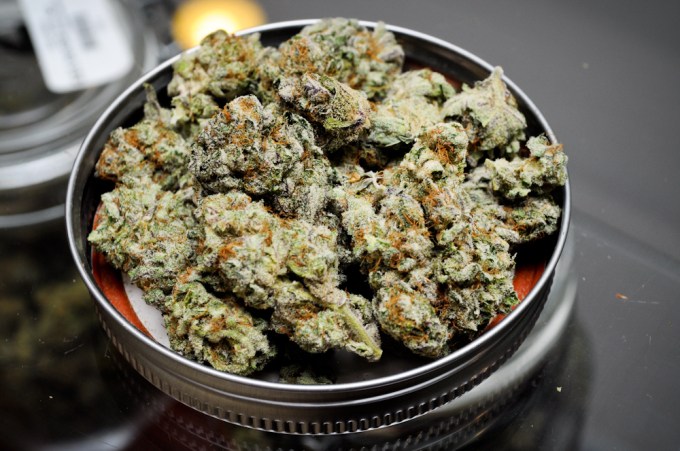 It’s high time the cannabis industry got some attention from investors. So it’s a good thing that Privateer Holdings, a company focusing on producing, distributing, and educating consumers about legal marijuana, has closed on a $75 million round of funding it will use to create new brands of cannabis products. Read More

Troubling Revelations: Roundup Herbicide Worsens Antibiotic-Resistance Already Fueled by Factory Farming
By Dr. Mercola
Scientific evidence demonstrating the harms associated with chemical-based agriculture and attendant confined animal feeding operations (CAFOs) have stacked up fast and furiously over the past several weeks and months.
Four components of our current food system causing a wide array of health and environmental problems are genetically engineered (GE) crops, pesticides, CAFOs, and the routine use of antibiotics in livestock.
This includes problems like antibiotic-resistant disease, weed and pest resistance, water shortages, environmental pollution, and toxic exposure through foods that threaten your health from the ingredient glyphosate, the main ingredient in Roundup.
Here, I’ll review some of the latest research pertaining to these issues, and how GE crops, herbicides, CAFOs, and antibiotics are synergistically exacerbating the problems created by each individually.
Most corn and soy grown in the US is genetically engineered (GE). According to US Department of Agriculture (USDA) data,1 94 percent of soybeans cultivated in 2014 were GE herbicide-tolerant, along with 89 percent of corn.
These GE crops end up in your diet both via processed foods—in the form of high fructose corn syrup (HFCS) and trans fat vegetable oils—and via CAFO beef and other animal products, as the majority of GE grains are actually fed to factory farmed livestock.
Groundbreaking Research Reveals Herbicides Promote Antibiotic Resistance
As it turns out, the use of antibiotics in agriculture is not the only way our food system promotes antibiotic-resistance—a trend that now threatens to revert our medical system back into the pre-antibiotic era when you could die from a common infection.
In the first study2,3 of its kind in the world, researchers found that commonly used herbicides also promote antibiotic resistance by priming pathogens to more readily become resistant to antibiotics.
This includes Roundup (the actual formulation of Roundup, not just glyphosate in isolation), which was shown to increase the antibiotic-resistant prowess of E. coli and salmonella. As reported by Rodale News:4
“The way Roundup causes this effect is likely by causing the bacteria to turn on a set of genes that are normally off, [study author] Heinemann says. ‘These genes are for 'pumps' or 'porins,' proteins that pump out toxic compounds or reduce the rate at which they get inside of the bacteria...
Once these genes are turned on by the herbicide, then the bacteria can also resist antibiotics. If bacteria were to encounter only the antibiotic, they would instead have been killed.
In a sense, the herbicide is 'immunizing' the bacteria to the antibiotic:...This change occurs at levels commonly used on farm field crops, lawns, gardens, and parks.’” [Emphasis mine]
Other herbicides scrutinized in the study include dicamba and 2,4-D, which is particularly relevant in light of the recent approval of a new generation of GE crops resistant not only to glyphosate, but also to dicamba and/or 2,4-D (an ingredient in the devastating defoliant Agent Orange).
This important research implies that combating the weed and pest resistance caused by Roundup Ready GE crops by introducing dicamba- and 2,4-D-resistant varieties is probably only going to speed up the process of creating multi-drug resistant pathogens.
And, since GE grains are fed to CAFO animals, the entire food supply is a massive source of potentially lethal multi-drug-resistant pathogens. The study,5 published in the peer-reviewed journal mBio on March 24, concluded that:
“Increasingly common chemicals used in agriculture, domestic gardens, and public places can induce a multiple-antibiotic resistance phenotype in potential pathogens. The effect occurs upon simultaneous exposure to antibiotics and is faster than the lethal effect of antibiotics.
The magnitude of the induced response may undermine antibiotic therapy and substantially increase the probability of spontaneous mutation to higher levels of resistance.
The combination of high use of both herbicides and antibiotics in proximity to farm animals and important insects, such as honeybees, might also compromise their therapeutic effects and drive greater use of antibiotics.
To address the crisis of antibiotic resistance requires broadening our view of environmental contributors to the evolution of resistance.”
More Support for Link Between Glyphosate and Escalating Antibiotic-Resistance
As noted by RenewableFarming.org,6 Monsanto “has long assured users that glyphosate is ‘as safe as table salt’.”
While dubious to begin with, quickly mounting toxicology research shows that such a statement has virtually no foundation in science—at least not in research that doesn’t have Monsanto’s fingerprints all over it.
As synchronicity would have it, on the same day that the mBio study was published, another study suggesting a similar hypothesis was published in the journal Surgical Neurology International.7
This paper is primarily focused on glyphosate's impact on chelation of manganese in the human metabolism, but it also has a section in which the authors hypothesize that glyphosate may cause an increase in the ability for pathogens to develop antibiotic resistance.
It does this by way of disrupting your gut bacteria and dysregulating manganese utilization. Manganese accumulation in your bile acids allows Salmonella to gain a stronghold there.
“Glyphosate acts as a catalyst for the development of antibiotic resistance genes in pathogens,” they write. “Since both poultry and cow manure are used as natural fertilizers in crops, it can be expected that a vector for microbial resistance to multiple drugs is through contamination of fruits and vegetables.
Indeed, multiple resistance genes have been identified from diverse phyla found in cow manure, including Proteobacteria, Firmicutes, Bacteroidetes, and Actinobacteria, that is, in phylogenetically diverse organisms.”
The study, authored by Anthony Samsel and Dr. Stephanie Seneff, also explains how glyphosate interferes with the synthesis of pyrrole (an aromatic organic compound) , which is crucial for the rings (heme ring, corrin ring, etc.) that biological systems build around minerals, including manganese, iron, and cobalt. According to the authors:
"Many diseases and conditions are currently on the rise in step with glyphosate usage in agriculture, particularly on GM crops of corn and soy. These include autism, AD, PD, anxiety disorder, osteoporosis, inflammatory bowel disease, renal lithiasis, osteomalacia, cholestasis, thyroid dysfunction, and infertility. All of these conditions can be substantially explained by the dysregulation of manganese utilization in the body due to glyphosate."
The take-home message here is that, in addition to the antibiotics livestock routinely receive, they also get another dose of “antibiotics” through chronic glyphosate exposure (courtesy of GE and conventional herbicide-treated grains), and if you eat these foods, you’re getting antibiotics via multiple routes as well. Moreover, endocrine disruptors such as glyphosate often have an inverted dose–response relationship, which means that low doses can actually have more severe effects than higher doses. As noted in Samsel and Seneff’s study, glyphosate in parts per trillion has been shown to induce human breast cancer cell proliferation in vitro. There’s lots of interesting information in this paper,8 so I highly recommend reading through it if you want to learn more.
CAFO Meats Are Also a Major Source of GMOs, Toxic Chemical Exposure, and Antibiotics
Besides the potential health and environmental risks of the genetically altered plants themselves, GE crops are also heavily sprayed with glyphosate, which the International Agency for Research on Cancer (IARC) recently classified as a “probable carcinogen” (Class 2A). 9,10,11 According to Dr. Aaron Blair, a cancer epidemiologist and scientist emeritus at the National Institutes of Health (NIH):12
“There were enough studies to suggest something was going on, but not enough to be sure that was absolutely happening.”
IARC is the research arm of the World Health Organization (WHO), and is considered the global gold standard for carcinogenicity studies, so this determination is of considerable importance. IARC is also one of the five research agencies from which the OEHHA—which is the California agency of environmental hazards—gets its reports to declare carcinogens under Prop. 65.
So, eventually, foods containing detectable levels of glyphosate will likely have to have a Prop. 65 Warning label to be sold in California. While glyphosate is commonly used on conventional crops, GE crops tend to be more heavily contaminated. Roundup Ready plants are designed to tolerate greater amounts of the chemical, and farmers growing GE plants tend to have more trouble with resistant weeds, requiring ever-heavier herbicide applications.
Contrary to industry promises and popular belief, GE plants have NOT resulted in reduced chemical use. On the contrary, genetic engineering has dramatically increased it. In his paper Pesticide Use on Genetically Engineered Crops,13 Dr. Ramon J. Seidler, Ph.D., a former Senior Scientist with the Environmental Protection Agency (EPA), presents USDA data showing that glyphosate use has increased 12-fold since 1996, when the first GE crops were introduced.
Disturbingly, on the heels of rising application rates, the US Environmental Protection Agency (EPA) significantly raised the allowable limits for glyphosate in food in 2013, despite studies suggesting harm might occur even at low levels. As noted by the Institute for Science in Society:14
“The amount of allowable glyphosate in oilseed crops (except for canola and soy) went up from 20 ppm to 40 ppm, 100 000 times the amount needed to induce breast cancer cells.” [Emphasis mine]
In addition to GMOs and glyphosate, CAFO beef and other animal products are also a significant source of antibiotics in your diet. In fact, 80 percent of the antibiotics used in the US are used in agriculture,15 for disease-prevention as well as non-medical growth promotion purposes.
Antibiotic Use in Food Production Continues to Climb, Despite Dire Warnings
Unfortunately, despite the ever-louder warnings of dire consequences, the US has done very little to curb antibiotic use in agriculture. On the contrary, antibiotic use increased by 16 percent between 2009 and 2012,16 and nearly 70 percent of the antibiotics used are considered “medically important” for humans. The result of this routine practice has led to an exponential rise in antibiotic-resistant disease, which now kills an estimated 23,000 Americans each year. Bacteria are also becoming increasingly multi-drug resistant.
A 2013 paper17 by the Center for Science in the Public Interest (CSPI) reports that between 1973 and 2011, more than half of the 55 antibiotic-resistant foodborne outbreaks in the US involved pathogens resistant to five or more antibiotics. And it’s likely to get even worse. According to a forecast study18,19 published in the Proceedings of the National Academy of Sciences in February, antibiotic use in livestock production worldwide could rise by nearly 70 percent by 2030.
The driving force is the growth in consumer demand for meat in middle-income countries, and the subsequent shift toward CAFO-style farming to keep up with demand. Add to everything I’ve already mentioned the fact that both our chemical-based agriculture CAFOS are a major source of air, water, and land pollution,20,21 (the latter of which is visually illustrated in the video below), and the status quo of our food system is really starting to look like a dead end.
You Are Part of the Solution
In my view, the evidence is overwhelmingly showing us that we cannot continue on our current path. We’re really at a “change or die” moment in history, even if these stark realities are not staring us in the face every moment of the day as of yet. The good news is, if Americans rapidly started making dramatically different food choices, it could quickly revolutionize the US agricultural system because farmers will grow that which sells. If people want uncontaminated organic foods, that’s what farmers will grow—and there’s already evidence that biodynamic farming can be done even on the large scale. In fact, using regenerative agriculture principles, you can grow a lot more food on fewer acres.
There are solutions. There are ways to begin to reverse the damage, but we must act quickly, and the political hamster wheel simply isn’t efficient enough to be an immediate solution. This change needs to be driven by consumer choice, because that’s going to promote quicker changes. So please remember, your money either goes to support the chemical-based system that threatens the survival of the Earth and your descendants, or it supports a system that can regenerate and revitalize the soil and the environment so that healthy food and healthy people can thrive. And, to make life-affirming choices, we need information, and that is why GMO labeling is so crucial.

'Dallas Buyers Club' wins landmark case to chase Australian pirates

If you are Australian and have pirated the movie Dallas Buyers Club, you may be on a hit list after the company behind the Hollywood film won a landmark court case in Sydney on Tuesday.
The parent company of U.S. company Dallas Buyers Club LLC, Voltage Pictures, who owns the rights to the 2013 Oscar-winning film, requested the personal details of 4,726 customers — who allegedly seeded the movie on BitTorrent — from Australian Internet service providers (ISPs)
The request is known as "preliminary discovery" and is where a party is unable to identify a person they wish to sue and seeks help from the court in identifying the person — in this case, by obtaining the names and addresses of the users. Read more...
More about Australia, Us World, Dallas Buyers Club, and IinetMonday, 6 April 2015
You can download Star Wars movies this week: Here's an exclusive peek

A long time ago, the original Star Wars movies were sold on laser disc and VHS; later came DVD and Blu-Ray. But you've never been able to download them (at least, not legally)
That changes on Friday, when Lucasfilm, Disney and Fox are making all six Star Wars movies available as high-definition digital downloads at last — alongside a whole host of extra content, much of it based on long-lost interview tapes from the archives
"Star Wars: The Digital Movie Collection" arrives April 10 on a variety of platforms: Apple's iTunes, Google Play, Amazon, Vudu, Xbox video, Verizon FiOS and Disney's own Movies Anywhere service. No word on pricing yet, but you'll be able to download them individually or as a package. The news was announced with an ad during the NCAA final game Read more...
More about Disney, Star Wars, Lucasfilm, Entertainment, and Film